

Dental Veneers Antalya Turkey
What Are Dental Veneers?
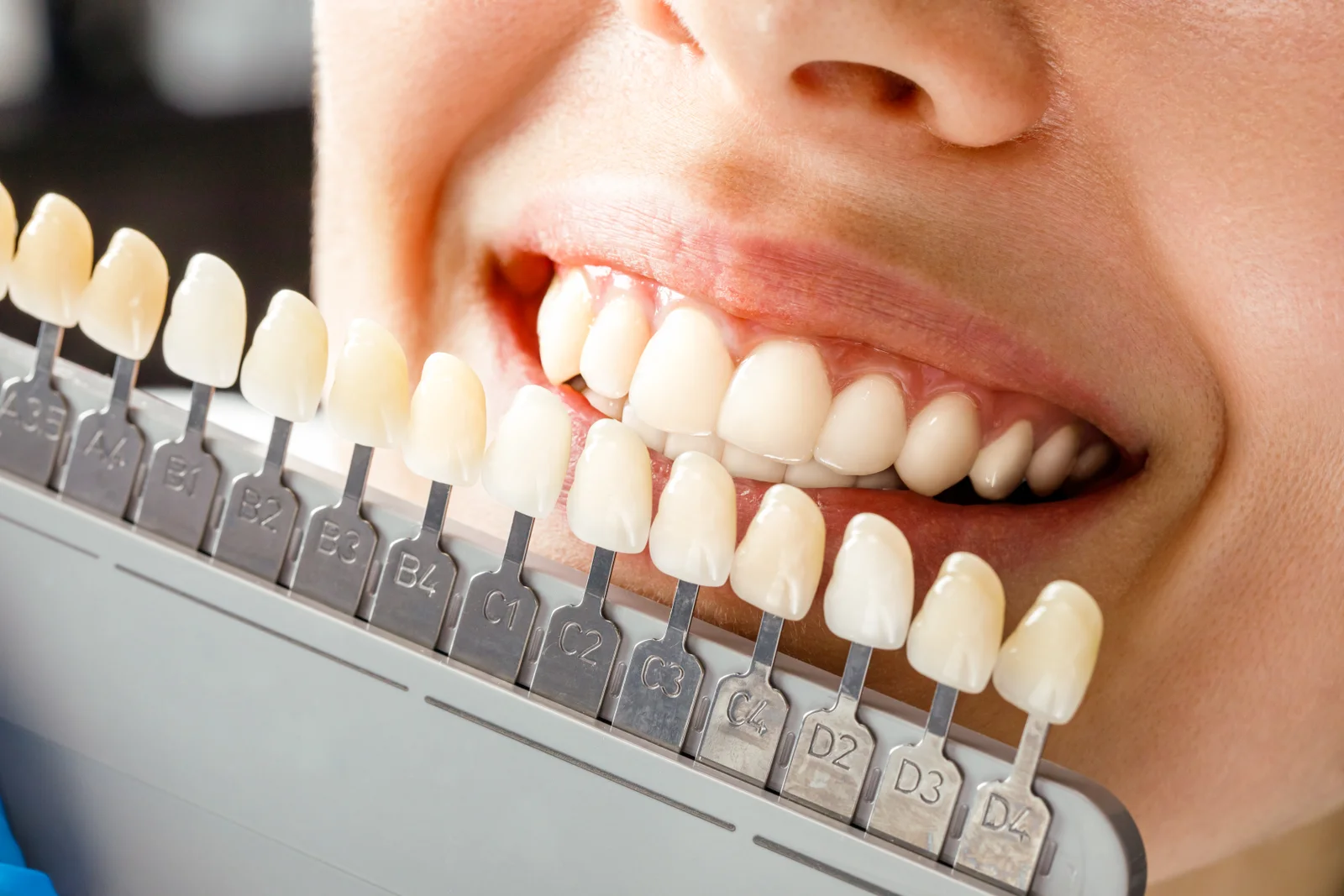
Dental veneers are a cosmetic restoration designed to refine the visible front of the smile. Veneers can upgrade:
- Tooth shade and brightness
- Proportions and symmetry
- Small chips and worn edges
- Gaps (diastema)
- Mild irregularities (visual alignment improvement)
Strategic note: Veneers are not a “one-style fits all” product. A clinical plan must balance aesthetics + bite function + gum health to protect long-term outcomes.
Who Is a Good Candidate?
You may be suitable when:
- Teeth are structurally sound (no active decay)
- Gums are healthy and stable
- You want an aesthetic change without orthodontics for mild cases
- You accept a planned, controlled process (design → trial → bonding)
Veneers may be delayed or alternative plans recommended when:
- Active gum disease or untreated cavities exist
- Severe misalignment requires orthodontic correction first
- Heavy bruxism (grinding/clenching) is unmanaged
- Enamel is minimal or tooth structure is compromised (needs crowns/other restorations)
Veneer Types (Clear Options)
Option A) Porcelain Veneers (High Aesthetic, High Durability)
- Excellent translucency and stain resistance
- Custom shade layering for natural appearance
- Strong long-term option when bite conditions are suitable
Option B) E-max Veneers (Lithium Disilicate)
- Premium aesthetic profile with refined light transmission
- Often preferred for “natural bright” outcomes (case-dependent)
Option C) Composite Veneers (Conservative, Efficient Option)
- Layered composite resin applied and shaped
- Can be faster and more economical
- Typically requires more maintenance and polishing over time (case-dependent)
Final selection is based on smile design goals, enamel availability, bite forces, and gum architecture.
Dental Veneers Treatment Journey (Step-by-Step)
1) Consultation & Smile Analysis
We align on your goals, evaluate tooth/gum condition, assess bite, and define success criteria.
2) Digital Planning & Smile Design Preview
A structured plan is created. Shade mapping and proportions are defined so expectations are measurable.
3) Tooth Preparation (Minimal, Controlled)
Where required, a conservative preparation is completed to create a precise bonding surface and optimal thickness.
4) Trial Smile (Mock-Up) and Approval
A trial step may be used to validate shape, length, and smile line before final bonding.
5) Final Bonding & Occlusion Check
Veneers are bonded with strict isolation protocols. Bite contacts are checked and refined to protect longevity.
What Results to Expect (Outcome Management)
A veneer plan targets aesthetic harmonization, not artificial uniformity. The objective is:
- Balanced brightness
- Natural translucency
- Proportional tooth geometry
- Stable gum-frame aesthetics (“pink aesthetics”)
Expectation control: Veneers are cosmetic restorations. They do not replace treatment for gum disease, tooth decay, or jaw and bite disorders.
Safety, Risks & Considerations (Transparent Disclosure)
Commonly discussed considerations include:
- Temporary sensitivity after preparation (varies)
- Chipping/cracking risk under high bite forces or bruxism
- Gum irritation if hygiene is poor or margins are not maintained
- Future replacement or repair needs over time
Risk-reduction typically includes:
- Proper diagnosis and bite planning
- Material selection aligned to function
- Precision bonding protocols
- Night guard planning for bruxism cases (if indicated)
Aftercare & Long-Term Maintenance
Operationally, veneers remain stable when patients follow:
- Twice-daily brushing + interdental cleaning
- Non-abrasive toothpaste recommendations (as advised)
- Avoiding habitual biting on hard objects (ice, pens)
- Periodic professional cleaning and bite review
- Night guard usage if prescribed
Dental Veneers vs Crowns vs Whitening (Decision Clarity)
- Whitening: changes shade of natural teeth only; does not change shape; restorations don’t whiten
- Veneers: change shade + shape on the front surface; ideal for aesthetic refinements
- Crowns: full coverage restoration; used when tooth strength/structure requires reinforcement