

Transparent Aligners Antalya Turkey
What Are Transparent Aligners?
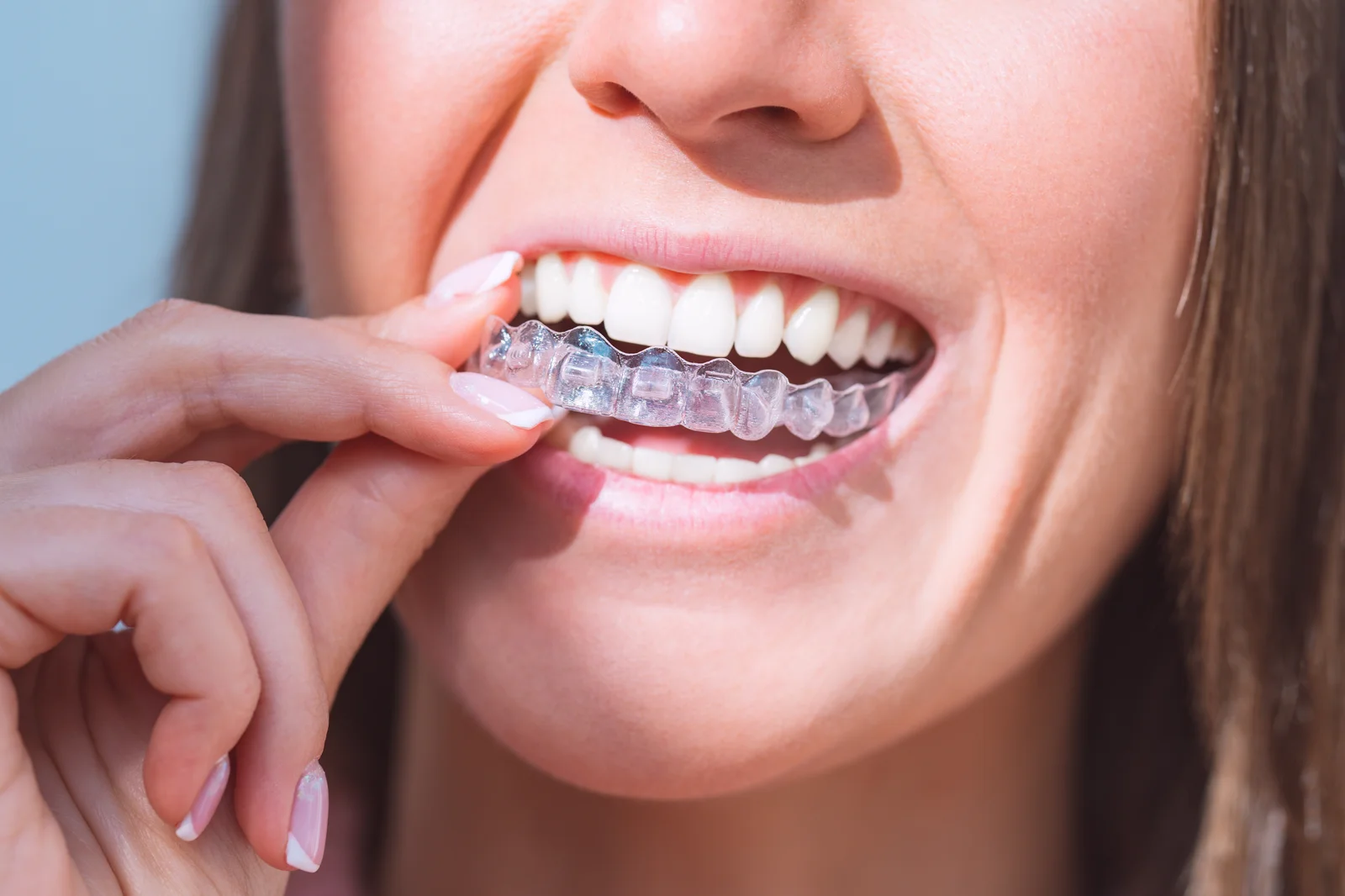
Transparent aligners are a clinician-led orthodontic system that uses sequential trays to shift teeth step-by-step. Treatment starts with diagnostic steps, like photos, scans, and X-rays when needed. Next comes a digital plan, tray production, and structured monitoring. Orthodontic treatment is selected based on the exact alignment and bite problem—there is no one universal plan.
Candidate Profile (Who Benefits Most)
You may be suitable when:
- You have mild to moderate crowding or spacing
- You want a discreet, removable solution
- You can commit to consistent wear time (typically 20–22 hours/day)
- Teeth and gums are stable (no unmanaged infection)
Transparent aligners may be limited or alternative orthodontic approaches recommended when:
- Severe bite discrepancies or complex movements are required
- There is active periodontal disease or untreated cavities
- Compliance risk is high (irregular wear time = unpredictable results)
What Problems Can Transparent Aligners Address?
Depending on clinical diagnosis and plan scope, aligners may correct:
- Crowding (teeth overlapping)
- Spacing (gaps)
- Selected bite concerns (case-dependent)
Outcome predictability depends on case complexity, wear compliance, and planned biomechanics.
Transparent Aligners Treatment Journey (Step-by-Step)
1) Consultation & Diagnostics
We align your objectives with clinical feasibility, then document baseline status. Orthodontic planning typically requires a structured assessment to determine the right approach.
2) Digital Treatment Plan (Clinician-Approved)
A staged movement plan is created and validated. This governs how each tray applies controlled forces over time.
3) Aligner Delivery & Onboarding
You receive your first trays plus a compliance and hygiene protocol. Many plans include:
Attachments (small tooth-colored grips) for better control (case-dependent)
IPR (minor enamel reduction) when required for space management (case-dependent)
4) Monitoring & Refinement
Periodic reviews confirm tracking and make adjustments when necessary. Treatment duration varies; your clinician defines it based on complexity and response.
5) Retention Phase (Protecting the Result)
After active alignment, retention is essential to maintain stability (retainer protocol defined individually).
Wear Protocol (Operational Standard)
For best clinical outcomes, aligners are typically worn 20–22 hours/day, removed only for eating and hygiene. This requirement is central to treatment efficiency and predictability.
Safety, Risks & Governance (Transparent Disclosure)
Transparent aligners are widely used, but they are not “risk-free.” Key considerations:
- Caries & gum risk: Aligners can trap food/liquids against teeth if hygiene is poor, increasing cavity and gum disease risk.
- Discomfort: Mild pressure is expected when switching trays (normal adaptation)
- Biological response: Orthodontic tooth movement carries known biological risks; these are managed via diagnosis, monitoring, and adherence to protocol.
Risk reduction controls (typical):
- Case selection based on diagnostics
- Clear hygiene and wear-time SOP
- Scheduled monitoring and plan refinement
Aftercare & Maintenance (Day-to-Day Execution)
- Brush and floss before reinserting aligners (non-negotiable).
- Remove aligners for meals; avoid sugary drinks while trays are in place.
- Clean trays daily using clinician-approved methods (avoid heat exposure).
Transparent Aligners vs Fixed Braces (Decision Clarity)
Transparent aligners: discreet, removable, hygiene-friendly; success depends heavily on wear compliance.
Fixed braces: non-removable mechanics can be more suitable for complex movements; best option depends on your diagnosis.